
- Sparx Science
How you can use our transition resources to support students
 Dan Gosselin|July 20, 2026
The Science curriculum covers a broad range of topics that build complex ideas over time for students. For example, in KS1 and 2, students begin learning about living and non-living things, nutrients and nutrition needed for life, and key life processes. Then in KS3, they are introduced to cells as the basis of all living things, and where these life processes happen. Finally in KS4, they look at how the subcellar structures carry out these life processes, and how hormones are used to co-ordinate between cells.
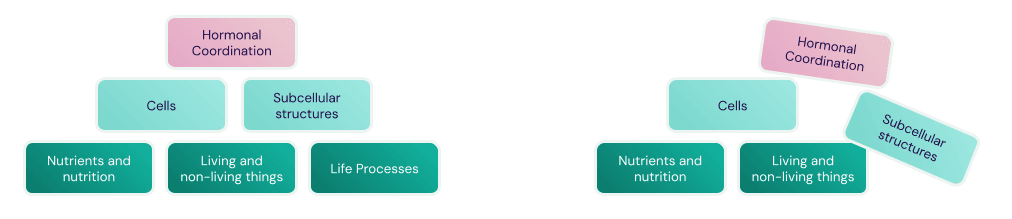
Even in this simplified sequence, we can see how students’ knowledge builds over time. Without a secure understanding of life processes, it’s harder to appreciate the importance of cells and the subcellular processes. New knowledge may still go in, but without those foundations, students can find it harder to build a deeper understanding of the concepts it connects to.
The science curriculum is large and complex, so making effective use of students' prior knowledge is a key part of teaching routines. Through do nows, assessment, and reteaching, teachers work hard to do this and fill gaps as they go. The research on prior knowledge is expertly summarised by this blog by Efrat Furst, and is great reading if you want to know more about the most effective ways to activate students' prior knowledge. However, with such a large volume of content to cover, some gaps can inevitably go unnoticed and build over time.
This is where our transition resources come in. They’re designed to help teachers identify gaps in foundational knowledge and provide tools to help them support students to the next stage. Last year we released our Year 7 Baseline Assessment, which focuses on identifying the gaps in KS2. This year, we have added new resources focused on the transitions from KS3 to 4, and KS4 to 5. These new resources have been designed so they can be used effectively within schools, so we want them to be deliverable and targeted, while still being meaningful. To do this, we have taken a different approach with each of our resources.
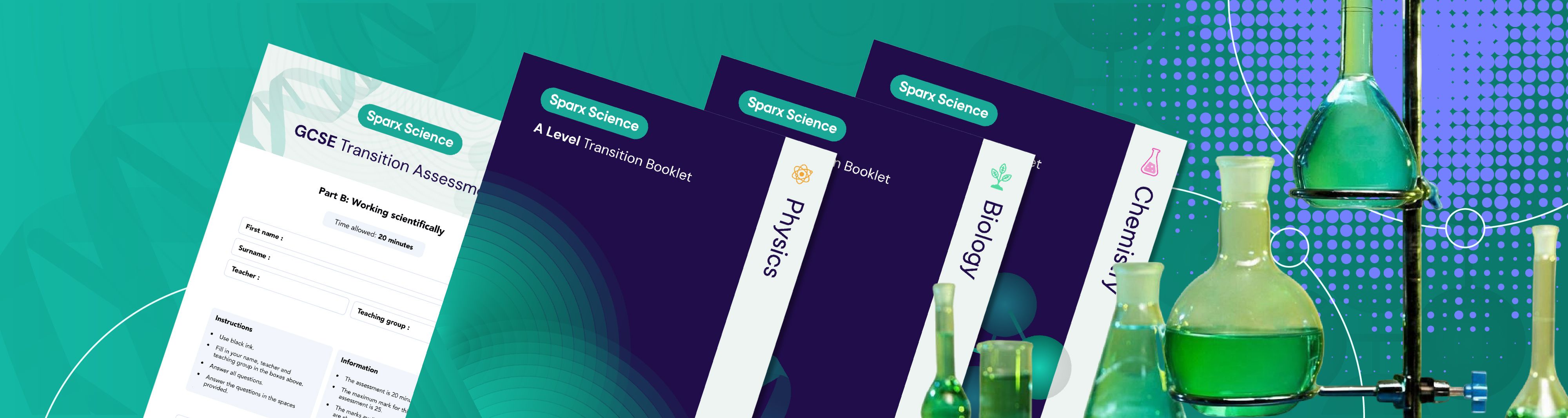
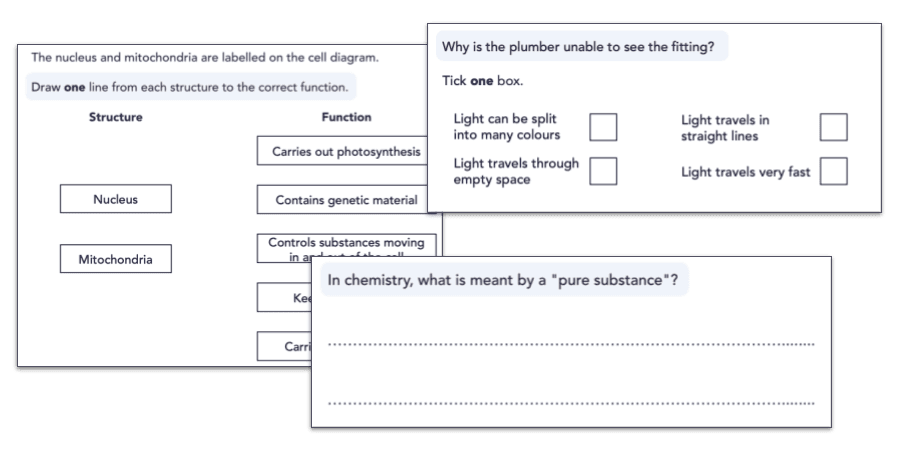
When looking at the KS3 to 4 transition, we wanted to ensure teachers could assess student knowledge in a controlled setting. This means we wanted to create flexible assessments that could be delivered in lesson time, be used no matter when schools start KS4 content, and assess the core knowledge and skills students need in GCSE - all whilst minimising the marking burden. This led us to create our GCSE Transition Assessments, consisting of a 45-minute Subject Knowledge paper and a 20-minute Working Scientifically paper, using a mix of question styles that are quick for a teacher to mark (think link boxes, multiple choice, and short answer questions.)
To ensure that teachers can still get meaningful insights from these papers, we have thought carefully about the topics and questions included, and have assessed each topic across multiple marks to give a clear representation of a student’s understanding of the wider topic. This means that assessing everything in the KS3 curriculum is not possible while keeping the paper to a reasonable length. As a result, we have focused on the topics that represent core themes from KS3 that return at KS4, as well as topics that are likely to come up early in a student’s KS4 teaching.
For example, the key parts of animal and plant cells form the basis for many other parts of the curriculum such as prokaryotic and eukaryotic cells, cell specialisation and differentiation, and more. Many resources and curricula start with cells, in fact our data shows that in Year 9, 52% of classes are set cells topics - often in the first few weeks, so we made sure to assess this. However, a topic like feeding relationships, only comes up for in 7.5% of Year 9 classes - not appearing for many until late in Year 11, and as a result, whilst feeding relationships are a foundational topic, we have not included questions on this topic as it will not be revisited until much later in a student's studies.
At the end of KS4, students have covered a large amount of content, and will choose their A Levels based on the subjects they are keen to study further. To ensure we still created a meaningful resource here, we focused on giving a ‘shed-load of practice’ for the GCSE content that is most foundational to A Level. For each subject, we selected around 230 questions from our content bank and compiled them, along with their mark schemes, into A Level Transition booklets for students to use as they begin their KS5 studies.
These resources can be used regardless of which exam board a student has studied with or is moving on to, as the content has been carefully selected to avoid material unique to any single one. In order to also allow as many students as possible to access these booklets, we have not included any content from the separate science specification, as this is not a pre-requisite to study A Level sciences. There is some higher tier content, where the GCSE content has a strong overlap or provides strong foundations for students moving up to A Level.
You can download these resources from the Sparx Science resources page. We hope that these resources will support you and your students as they progress through the key transition points of the science curriculum, helping them build secure knowledge they can draw on for years to come.