

- Sparx Maths
The impact of times tables practice in Sparx Maths
 Fay Sheppard- Education Director|September 24, 2025
Fluent recall of times tables is an essential ingredient for mathematical success. It’s crucial to avoiding cognitive overload for students and supporting learning across the maths curriculum. Yet at the start of Year 7, 59% of students lacked this fluency¹.
During the autumn term of 2023/24, over 100 schools took part in a Randomised Control Trial. Half of the students were given weekly times tables practice, and half were not. The results showed that just 5 minutes of weekly Sparx Times Tables practice led to 50% more progress than without it.
Times Tables in Sparx Maths
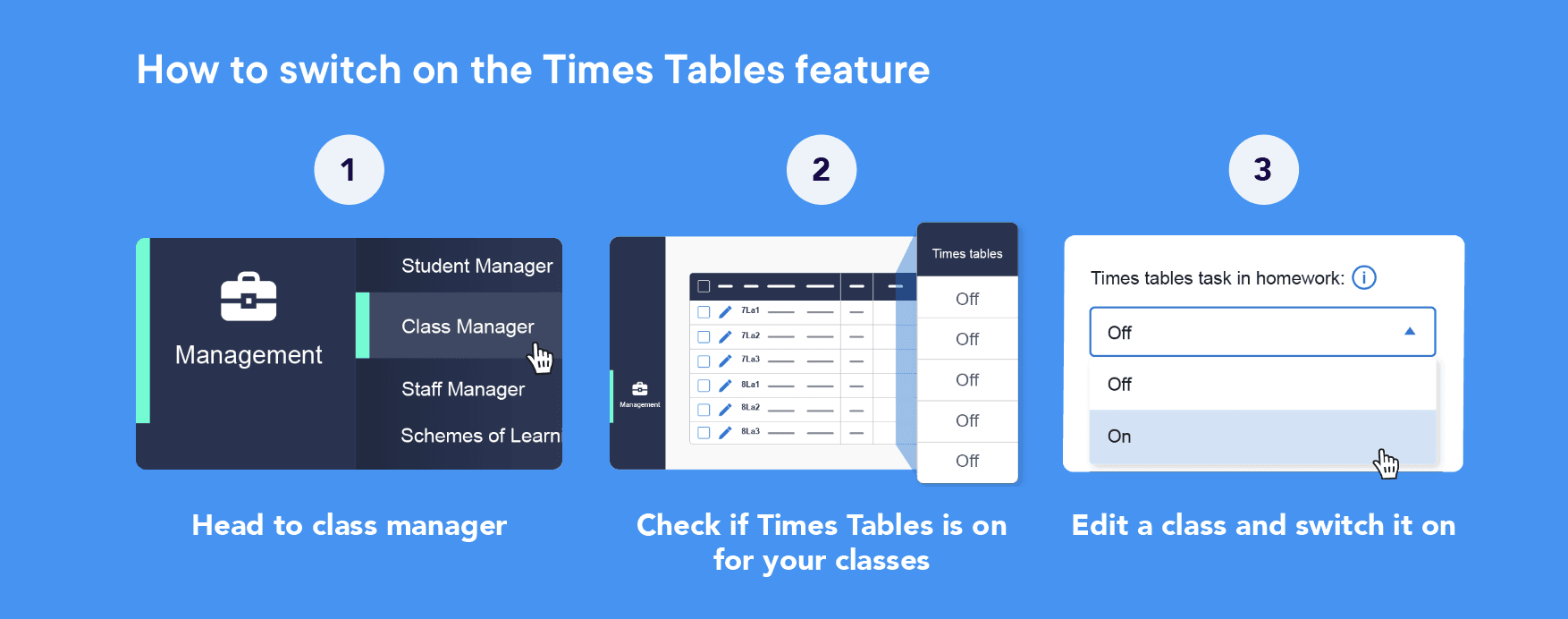
Sparx Maths Homework allows teachers to set weekly practice aligned to lessons, with an optional Times Tables feature offering quick 5-minute quizzes. The example right shows how times tables underpin topics across the curriculum.
How they practice:

Students who did Sparx Maths Times Tables improved more
These findings were based on assessments carried out on both groups three times across the Autumn term, using an assessment equivalent to the government Year 4 Multiplication Tables Check. The improvement in average mark was 1.72 for the control group and 2.58 for the trial group. Students who used Sparx Maths Times Tables saw, on average, a 50% greater improvement in their times tables assessment score than students who did not. These improvements were true for both pupil premium and non-pupil premium students.
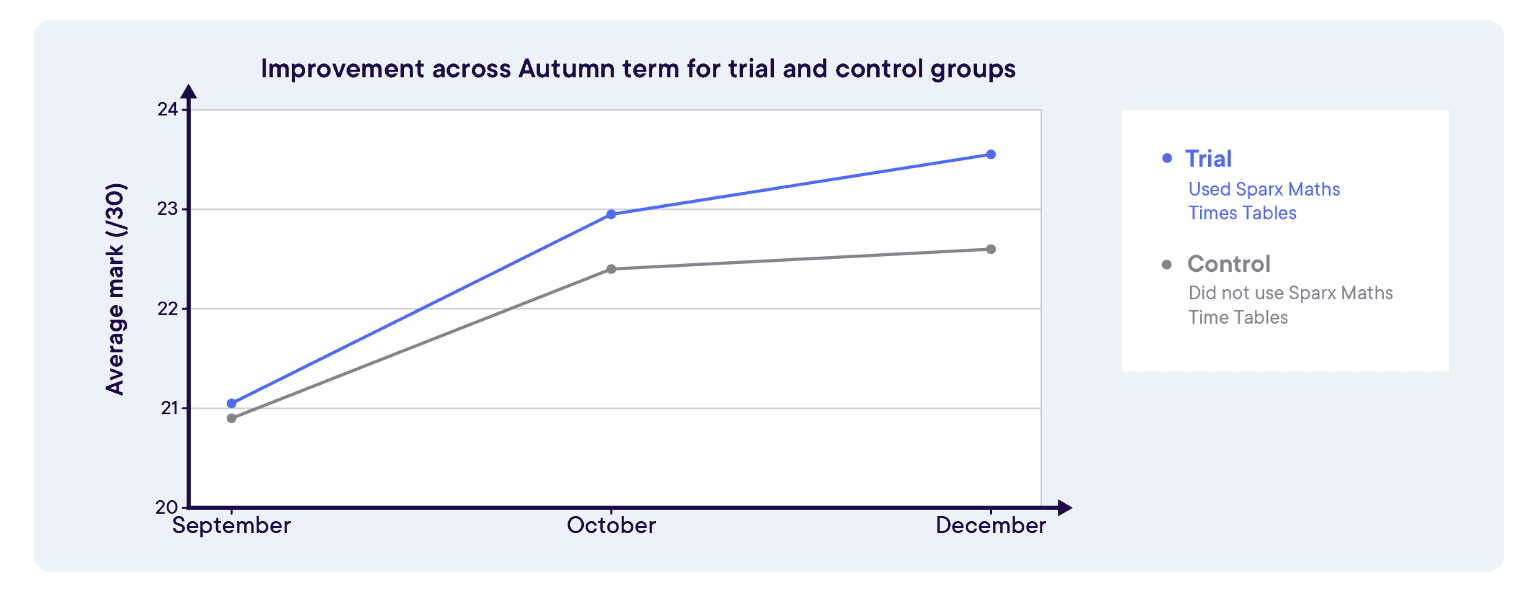
By the end of the Autumn term, the percentage of students who were not fluent in their times tables had decreased from 59% to 46.6% in the control group.
In the trial group a larger decrease was observed, down to 41.3%.
Lower attaining students made the most progress
We also investigated progress across different ability groups, by looking at data across the lower, middle and higher thirds².

The trial group made more progress than the control group across lower, middle and higher attaining pupils. However, the data showed that the lower attaining students who used Times Tables in Sparx Maths made the most progress.
How we recommend building times table fluency
Students who used Sparx Maths Times Tables for just 5 minutes each week improved 50% more than those who did not, and were more likely to achieve fluency. The impact was especially strong for lower-attaining students, who made greater progress than their higher-attaining peers.
Based on these findings, we recommend switching on Sparx Maths Times Tables for all Year 7 students from the start of the academic year to help them build fluency and access the wider maths curriculum with more confidence.
Appendix 1 - Methodology
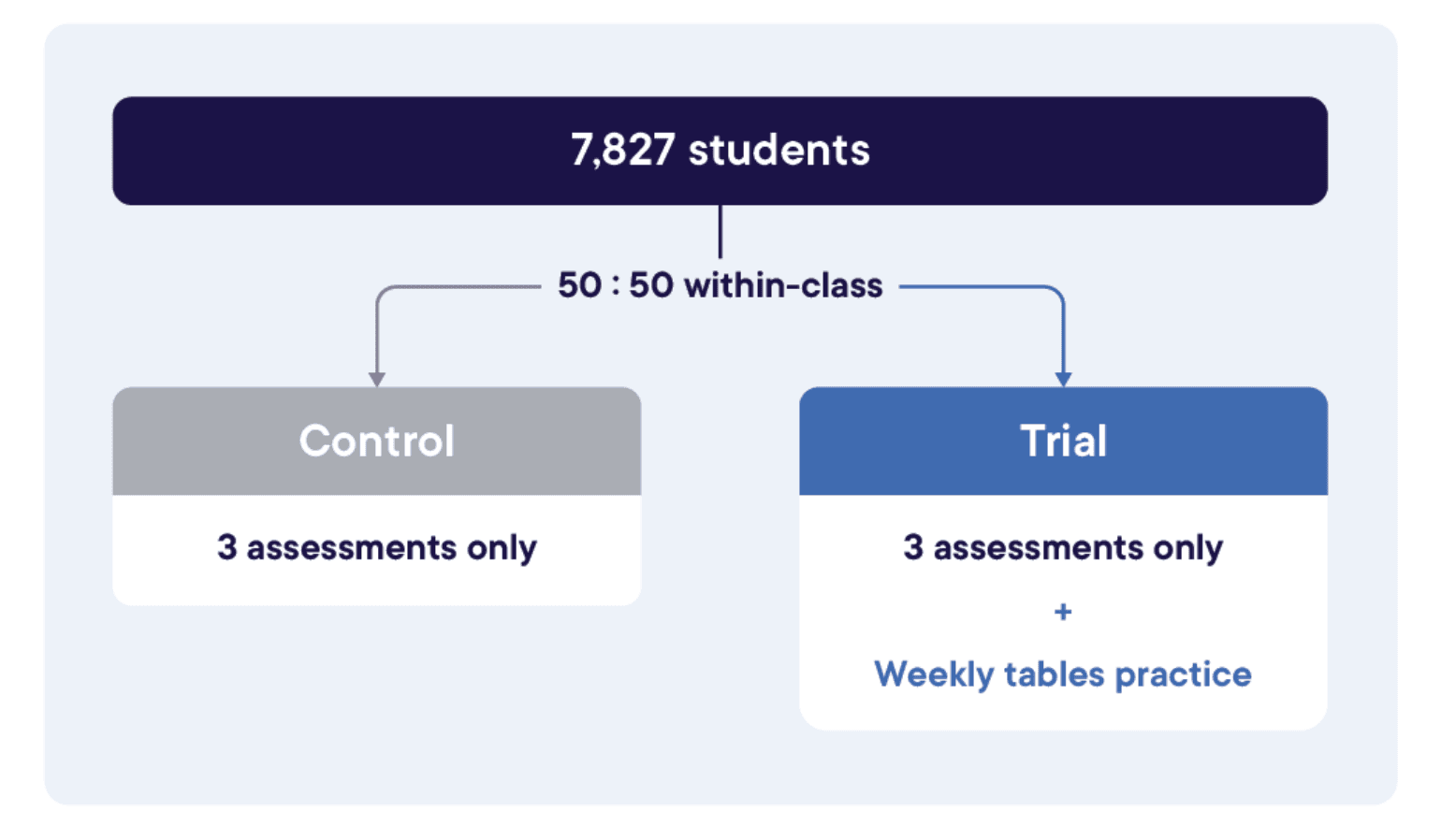
7,827 students across 103 schools took part in a Randomised Control Trial (RCT) from September to December in 2023.
How were the groups set up?
- Within each class, students were randomly allocated to a control or trial group; each class had a 50/50 split.
- The control group received no Times Tables practice in Sparx Maths.
- The trial group received the normal Sparx Maths Times Tables task which they had to complete³ in their weekly homework.
How did we measure fluency and progress?
- The control group and the trial group were assessed three times during the RCT. In September (the start of the trial), October (half-term) and in December (end of Autumn term).
- These assessments aimed to measure initial fluency in times tables and students’ progress in the trial from September to December.
- The assessment was delivered as a Sparx task and consisted of 30 questions:
- The first 25 questions were equivalent to the government Year 4 Multiplication Tables Check (MTC)
- The last 5 questions were chosen as some of the most difficult times table questions.
- A six second timer was shown for each question, equivalent to the Year 4 MTC. Students were still given as much time as they wanted to enter their answer but correct answers entered after the six second timer were counted as wrong in this analysis.
¹Not fluent is defined as any student who scores less than average in an equivalent Year 4 Times tables test sat in September of Year 7 (i.e. <20/25).
²Based on the Sparx Maths Homework correctness model ability on October 1st 2023
³The Sparx Maths Times Tables task is complete when students answer 50 questions correctly, which on average takes 5 minutes.