

- Sparx Reader
Do 'Easy Readers' have a place in Literature teaching?
 Kate Pretsell|April 28, 2026
Why we've gone to such lengths to write easier-to-read versions of the Shakespeare and 19th century classic texts, and how they support students to know the full stories without compromising on the integrity of the originals (3-4 minute read).
The classroom crunch
Sometimes it can take 60 minutes (longer, even!) to do a first read, establish meaning, and then closely read just one scene in Macbeth (Act 1 Scene 3: I‘m looking at you) with a Y10 group encountering it for the first time. It doesn’t take a genius to work out how long it would take to do justice to all 28 scenes in 6 weeks, let alone preparing students to think of - and express - ideas about the text deeply and critically.
Teachers have to be creative. We have to make difficult decisions about what needs to be prioritised in class, especially with AI’s impact on written homework. So, sometimes, this results in us conjuring textual jigsaws to life, where pupils experience a text through a series of different media spliced together to make an unsteady ‘whole’. This is especially true of both KS3 literature teaching and revision of exam texts throughout Y11.
'Analytical spaghetti' and other shortcuts
We all recognise and understand how teachers can sometimes be driven to extremes, like boiling entire texts down into one-pagers (once, I squeezed all of the ‘essential bits’ of Romeo and Juliet onto one sheet of A3 and papered over the cracks inbetween them with snippets of the movie…), or whipping through the full plot using key lines and short summaries, before passages are then lifted from the original for later, in-depth-study. In some contexts, the curriculum pressure-cooker has even driven subplots to be surgically removed in the name of efficiency. Once, in a moment of crisis, I reframed Jekyll and Hyde as a giant flowchart on my whiteboard and kept it up there for months as a crutch. By the end of term, so many parts had been repeatedly underlined, and there were so many arrows and connectors looping and linking parts of the book, both the diagram and everyone’s senses were reduced to analytical spaghetti.
By the way, there’s nothing inherently wrong with doing some of these things - sometimes, judiciously - to supplement meaning-making, but they can become the default ways we expose our pupils to difficult books, especially at KS3. This feels especially problematic given how few students are reading full books otherwise and elsewhere (for more on that, see this in The Atlantic).
The war on 'extractification'
The thing is - as my dismal Jekyll and Hyde flowchart originally intended to do - there is an overarching need to keep these texts current, accessible and explorable for our students. Yet, learners must encounter the glue that sticks those ‘key moments’ together. I always default to Doug Lemov’s lovely sentiment in Reading Reconsidered that students need to build a ‘sustained relationship with a book’, and the importance of emergent readers revisiting the same (whole) text in a serialised fashion, picking up where they left off the last time. Ultimately, nobody wants to butcher Stevenson, Dickens and Shakespeare, but with the clock ticking, ‘passageification’ creeps in before teachers realise it. Our Easy Readers can do a lot of heavy lifting in this department.
It’s crucial that our pupils have knowledge of Malcolm and Macduff’s arcane tussle about kingship in Act 4; it’s vital that they’re exposed to all of Mercutio’s musings and the Nurse’s endless ramblings in between the dramatic flourishes; pupils should be leaning into every moment the Mechanicals are bumbling along with their sillinesses. Each of these micro-moments is greater than the sum of its parts, and when we overlook them or reduce them to a hasty synopsis, we harm our pupils’ ability to situate those bigger ‘analysable’ moments because they’re lacking deep familiarity with the richness of that story’s world.
But, it’s pretty tricky to give these ‘lesser’, gluey parts oxygen when you’ve devoted 100 minutes (in glorious flow with your class, mind) to combing over the early warning signs of Macbeth’s downfall in a mere handful of big-hitting lines from Act 1.
Enter the Easy Reader
So, where do our Easy Readers come in? Easy Readers bring the structure into stark relief and give voice to all those micro moments that stack up to create fullness. They strengthen intra-textuality (because it’s pretty hard to make original connections within a book if you haven’t really read the whole thing). Most importantly of all, though, they bring the complexity down to a level that means the whole book can be read and re-read independently, even by students who find reading hard. Yet, we know struggle is important; we know students should feel comfortable with (some) struggle as they read, and reading these texts cover to cover is a necessary struggle.
So, our Easy Readers aren’t infantilising short-storyified versions of the originals: they’re full, almost line-by-line transliterations that preserve the integrity (and poetry, where relevant) of the originals, written by incredibly thoughtful people who know a lot about literature, a lot about metre, a lot about reading, and a lot about struggling and reluctant readers.
Our Easy Readers provide a consistent reading experience where students receive immediate proof that they’ve read it properly, which helps them to persevere through the parts that - even in Easy Reader format - might feel a little tricky (like how we’ve deliberately kept in some original lines, as well as retained some of the nuance and word-play, especially in our Shakespeares). Oh, and they took months and months to write (we’ll get into the weeds of that in the next blog).
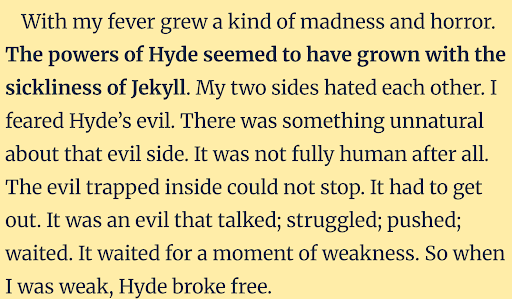
There’s a difference between handing out copies of A Christmas Carol to your pupils and instructing them to read it independently, and setting them a slightly more straightforward version on Sparx Reader that you know will not only convey the fullness of the narrative and characterisation, but also hold them to account for reading closely and carefully by regularly asking them recall questions about the 200 words or so that they’ve just read. Some teachers might baulk at the idea of an Easy Reader (and we can see exactly why they might, at first glance), but we need to think about what having high expectations of our pupils actually looks like: in our view, it’s having the conviction that everyone can achieve automaticity in discussing, interrogating, teasing apart and opining about these hugely intricate and archaic texts. Our Easy Readers unlock this all-important deep familiarity. And, a world where the first read and the close read don’t have to happen simultaneously now does exist!
Bridging the gap, not replacing the teacher
It’s worth saying that we believe all students should access the originals, with expert guidance from their teachers (that’s why we don’t advocate the use of our Easy Readers in the classroom). But, we also understand the profound challenges teachers face in traversing the whole text and keeping it ticking over within the constraints of the timetable and the sheer extent of curriculum/ exam content, let alone chronic attendance issues. We hope that the original versions of these texts on Sparx are set for all pupils at some stage of their GCSE journeys. As one of our HoDs recently told us, the Easy Readers ‘give a level of support to bridge the gap’ before the inevitable ‘step change to something a bit meatier’.
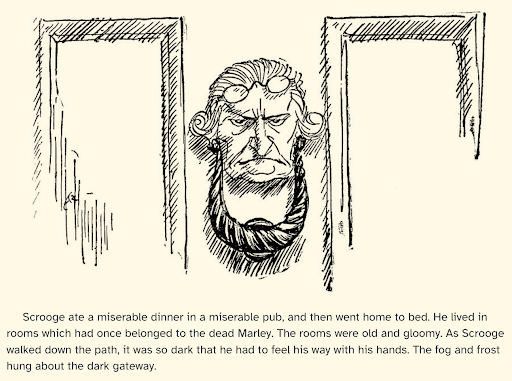
“But, Miss, she said that already in Act 1!!”
It’s every teacher’s dream that our students will eventually make original connections between parts of the story: ‘this caused that’; ‘that’s the same idea being repeated’; ‘that trend has been disrupted by this new information’. We all know that the best essays are the ones that deftly knit together moments from throughout the texts, not the ones that wring the meaning of a single word dry (sometimes I wonder if the word ‘connotation’ should be blacklisted, such is the extent of its misapplication). Knowing the text ‘backwards and forwards’ is a pretty hard thing to achieve when all your pupils have to go on is a string of bits of the original text, which is why the Easy Readers have been utterly transformative for so many teachers and students: they allow for dependable, uniform ‘reading rehearsal’ outside of lessons. We love it when a teacher gets in touch to say that a pupil ‘noticed something new’ while reading the Easy Reader!
Before I finish, it’s important to underline this: with our Easy Readers (and the original versions), we’re interested in giving pupils a consistent experience of habitual, careful, accountable reading and rereading. And that’s all we’re interested in. We want to serve classroom teachers, not displace them or undermine their methods. So, what we’re not interested in is doing the thinking for pupils by belt-feeding (and then testing them on) rote-learnable analytical snippets. The only thing we stand for is supporting students to establish meaning, so that they can then do the hard stuff (with or without teacher guidance) on solid foundations. Truly, it’s not our place to direct their interpretations of these texts, so we steer well clear of that. While not directly offering interpretations, we hope to support students to make them by funnelling their attention to the most significant moments on each page through our question design.
So, our Easy Readers are actually operating on several different levels: they give everyone the chance to (repeatedly) read something as close to the original as they're ever likely to get, in a steady format; students know instantly if they have or haven’t read a section in enough depth; they are the antidote to time-poor teachers having to rely on shallow summaries and skating over scenes; and, finally, we believe they have the potential to re-ignite accountable homework behaviours, when students suddenly feel the power of deep familiarity of the text before a close-read in class.
End note:
Kate has taught English in London secondary schools for 17 years, and has recently started specialising in teaching reading at a school in North London. She has experience leading whole-school literacy initiatives on sentence-level writing, detailed here.